
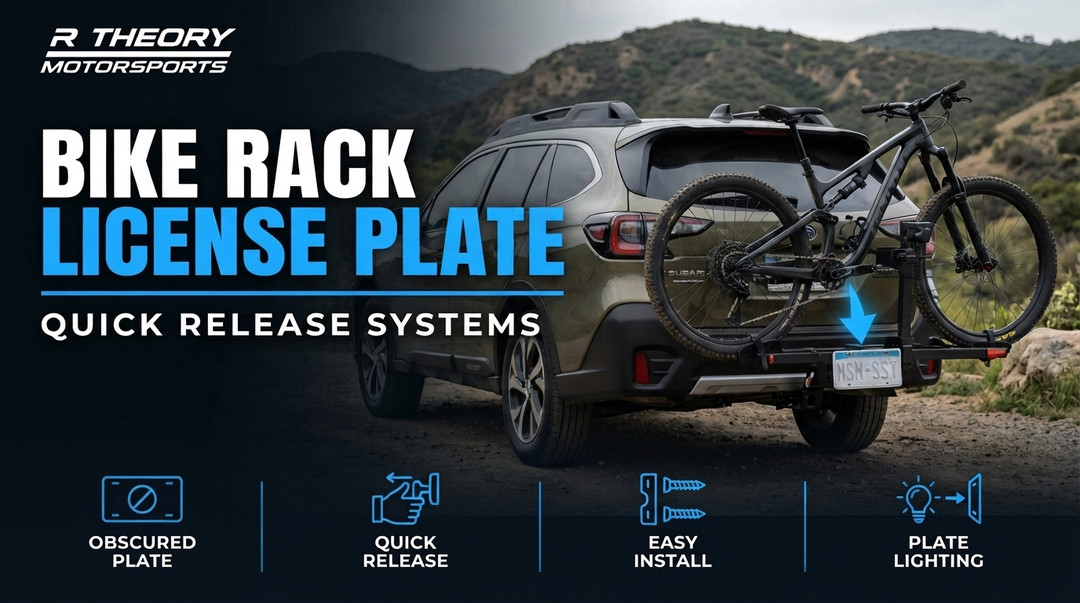
How to Choose a Bike Rack License Plate Quick Release System
2026 Nov 24th
If you carry bikes on the back of your vehicle, you have probably run into a frustrating problem. The rack blocks your license plate. Whether you use a hitch-mounted rack, a trunk-mounted rack, or a rear carrier, bikes and frames can easily cover the plate and make your vehicle hard to identify. That is where a bike rack license plate setup comes in.
It lets you move your plate to a spot where it stays visible, and a quick release system makes it easy to take it on and off when you need to. Before you buy one, here is what you should know.
What Is a Bike Rack License Plate Quick Release System?
A bike rack license plate quick-release system is a bracket or mount that attaches your plate to or around your bike rack instead of to the vehicle. The 'quick release' part is that you can mount and un-mount the plate in seconds, usually without any tools. This is handy because you probably don't carry bikes every day. With the rack out of the way you can put your plate back where it belongs. Once the rack is in place, you can mount the plate where it will be visible.
Most systems include a plate frame or bike rack license plate holder, a mounting bracket, and hardware to attach everything to the rack or the vehicle. Some also include a light to keep the plate visible at night.
Why You Might Need One
Many people only realize they need this after their first trip with bikes on the back. A few common reasons include:
- The plate is blocked by bikes, wheels, or rack arms.
- You want to avoid a traffic ticket or warning for a plate that can't be read.
- The rack can be taken off, and you don't want to drill into the bumper.
- You travel a lot and need a setup that you can take with you from one car to another.
A good bike rack license plate mount takes care of all of these problems without a lot of effort.
Check Your Local Laws First
Spend a few minutes looking up the rules where you live before you buy anything. Most places want your plate to be clearly visible from behind, and a lot of places want it lit at night too. Some areas have rules about how high or deep the plate mounting can be and how much of it can be covered.
Laws vary from state to state and even country to country, so it's a good idea to check your local transportation or motor vehicle department website. A bike rack license plate setup is only useful if it keeps you legal on the road.
Know Your Rack Type
Not every rack works the same way, and that affects what kind of plate mount you need. Here are the most common types:
- Hitch mounted racks attach to your trailer hitch and usually sit low behind the vehicle. They do have a tendency to cover the entire plate, so a relocation mount is very helpful.
- Trunk mounted racks strap onto the trunk/hatch. These can cover the plate and sometimes the back lights as well.
- Roof racks usually do not obscure the plate, though a tall load or a bike hanging off the rear could still block it on some setups.
- Spare tire racks can mount on the back of SUVs and can hide the plate behind the bikes.
Knowing which type you have helps you pick a mount that sits in the right place and attaches securely.
Fitment and Mounting Options
One of the most important things to check is the fitment. Your bike rack license plate holder has to fit your specific rack or vehicle and not wobble or be at a weird angle. Some holders clamp to the rack frame, some bolt to the hitch, some attach to existing holes on the bumper.
Look for a holder that clearly states which rack types it is compatible with. A good bike rack license plate holder should also fit your plate snugly, with no loose edges to rattle as you drive. If the description is vague, ask the seller before you order. A holder that fits poorly can rattle on the road, wear out fast, or even fall off.
Universal Options
Some buyers consider a universal motorcycle license plate bracket an easy, inexpensive way to get a mount. These brackets are made to fit many different bicycles and in some cases can be adapted for use on a bike rack. These are usually small, light and easy to locate.
There are a few things to keep in mind, though. A universal motorcycle license plate bracket might not be able to hold a standard car plate because it is made for a smaller motorcycle plate. Before you buy, make sure that the plate you want to use fits the bracket. If it's not a perfect fit, the plate might hang over the edge or not sit flat.
That said, if your plate size fits and you only require a light duty solution, a universal motorcycle license plate bracket can work well. Make sure it's strong enough to withstand road vibration and wind.
Material and Durability
The material is important because your plate mount will be exposed to rain, road salt, dirt and sun. Typical options are:
- Aluminum: Lightweight and resistant to rust. A good all-around choice.
- Stainless steel: Very strong and durable, but a bit heavier.
- Powder coated steel: Tough and affordable, though the coating can chip over time.
- Plastic: Cheap and light, but more likely to crack or fade.
Aluminum or stainless steel offers the best balance of strength and weight for most buyers. If you drive in snow and road salt areas, rust resistance should be near the top of your list.
Visibility and Lighting
Think about where you will place your plate on the mount; it should be easy to read from a safe distance. Hold the plate upright, facing straight back, not tilted up or down. Avoid spots where bikes, straps, or the rack itself cast shadows onto it.
See if your mount has a light or can accommodate one if your plate needs to be lit at night. In some cases, the rack can also block your vehicle's tail lights and turn signals, so you may need a separate light bar. Most people don't think about this until they are out on the road.
Ease of Installation
A good system shouldn't take hours to install. Look for one that uses only basic hand tools, or none, and has good instructions. If you are comfortable with simple installs, you should be able to fit most plate holders in less than half of an hour.
Think about how simple it will be to put the mount away when it's not in use. A bulky item is not as convenient as a compact design that will fit in your trunk or garage.
How the Quick Release Works
Pin or Clip Style
A pin or clip slides through the bracket and the plate holder to lock them together. To release it, you pull the pin out or squeeze the clip, and the plate comes off. It is fast and simple, but the pin needs to seat fully so it does not work loose on the road.
Twist Lock Style
A twist lock works by turning the plate holder a quarter turn or so until it locks into the bracket. To remove it, you twist it back the other way and lift it off. This style holds firmly and takes only a few seconds.
Clamp Style
A clamp grips the plate holder or the rack frame and locks down with a lever or latch. You flip the lever to tighten it and flip it back to release. Clamps spread the pressure evenly, which helps keep the plate steady.
Hand Knob Style
A knob style uses a threaded knob that you tighten by hand to hold the plate in place. Turning it loose lets you slide the plate off, with no tools needed. Check it every so often, since vibration can slowly loosen it.
How to Test Whether It's Secure
Once the plate is locked in, give it a firm wiggle. If it moves easily, the system may not hold up on a bumpy road. A good one should feel solid when locked and release smoothly when you need it to. Reviews from buyers who have used the mount on long trips can also show how well it holds up.
Common Mistakes to Avoid
- Buying a mount without checking the rack type
- Ignoring local plate visibility and lighting rules
- Choosing a plastic mount that cracks after a few trips
- Forgetting to check the plate size
- Skipping reviews from other rack owners
Quick Buying Checklist
Before you check out, run through this list:
- Does it fit my rack and my vehicle?
- Is it legal where I live?
- Is it made from a durable, weather resistant material?
- Does the quick release feel secure?
- Can I keep my plate visible and lit at night?
- Is it easy to install and remove?
FAQs
Do I need to move my license plate if my bike rack only blocks part of it?
In most places, a plate that is even partly covered can still get you a warning or ticket. If any part of the plate, the numbers, or the registration stickers is hidden, it is safest to relocate it. Rules vary by location, so check with your local motor vehicle department.
Is it okay to leave my plate on the bike rack when it's not on my vehicle?
It's best not to. Your plate is tied to your vehicle's registration, so it should go back on the vehicle when you take the rack off. Leaving it on a loose rack also raises the risk of it being lost or stolen. A quick release system makes it easy to remove and store the plate between trips.
Can a quick release plate mount scratch my vehicle or rack?
It can if hard metal parts rub against paint or the rack frame, especially on bumpy roads. Look for mounts with rubber pads or soft contact points, and wipe off dirt before installing. It also helps to check the mount now and then to make sure nothing has shifted.
Get the Right Setup Today
It's important to make sure that the bike rack license plate quick release system fits well, lasts a long time, and lets you keep your plate visible and legal. Spend some time, learn the rules in your area, and pick a mount that is made for the way you journey. If you want a setup that is built to last and fits well, R Theory Motorsports has options that will help you feel safe on the road.
Browse our selection today and find the right bike rack license plate solution for your next trip.