
How to Store a Modified Car for Winter: The Complete Guide
2026 Oct 28th
Battery, tires, rodents, insurance, and the mistakes that lead to an expensive spring. Works for tuned daily drivers and OEM+ builds too.
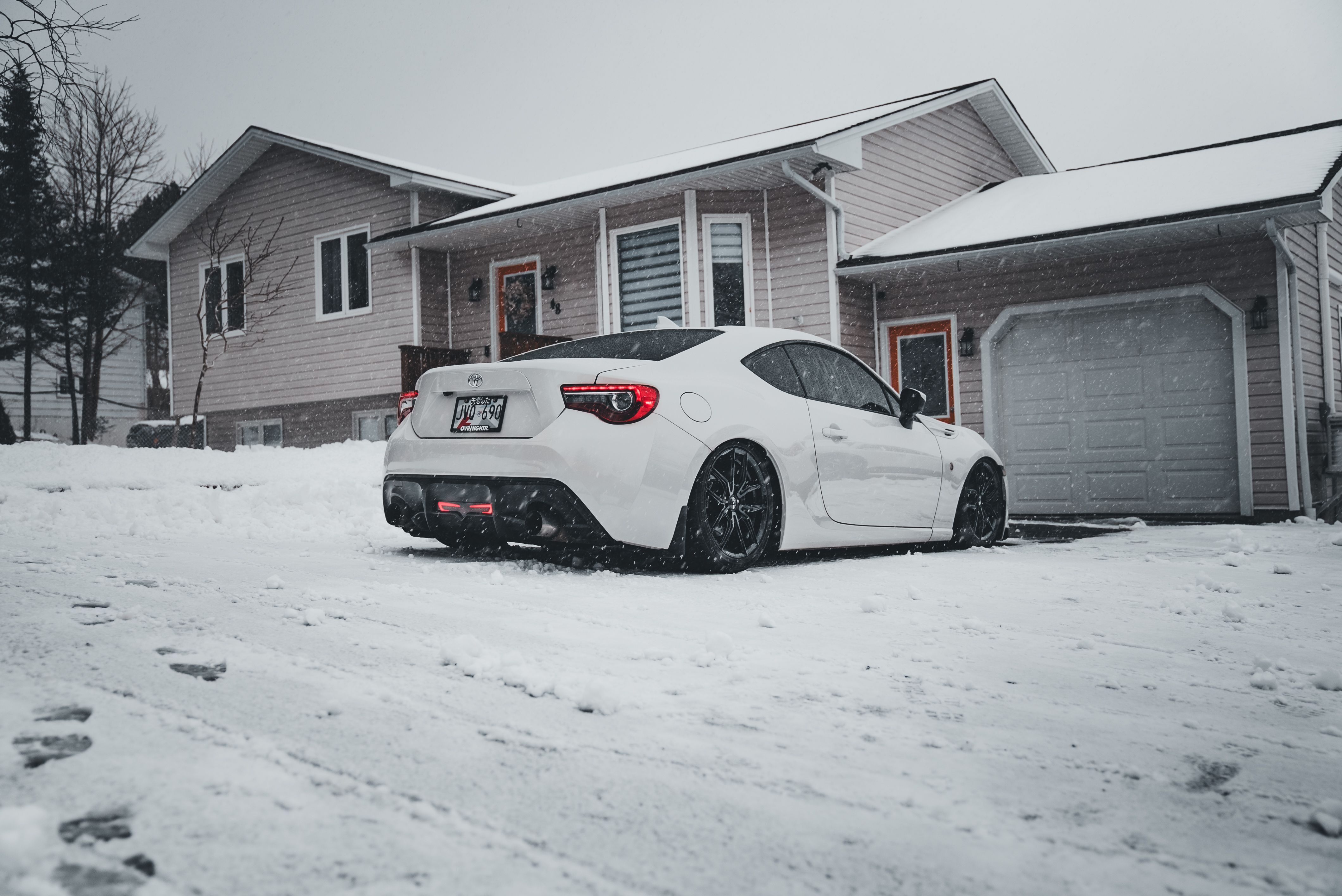
Contrary to what the title suggests, this guide also applies to daily cars and tuned OEM+ cars, not just heavily modified, track-ready builds.
Your battery is dead. There's a dead rodent in your engine bay, and worse, evidence that it ate your wiring. You jack up the car and find a corroded underbody, and suddenly your road-legal track car has handed you a triple-dollar-sign repair bill. So much for the spirited backroads drive you've been waiting on all winter.
Except it's not spring yet. Winter is coming, which raises the question: how do you store a modified car for winter? Whether you're doing winter storage for a performance car or just tucking in a tuned daily, here's how to do it right.
First, where do you live?
Winter hits differently depending on your location, so this guide uses three tiers. Look for the tier tags throughout to see what applies to you.
|
Tier |
Location |
|
Tier 1: Cold and Salted |
Canada, Northern US, Great Lakes, Northeast |
|
Tier 2: Mixed |
Humid locations that tend to freeze |
|
Tier 3: Mild |
Southern US, Pacific Coast |
Tier 3: You can mostly skip the salt and freeze-related steps, but the moisture, battery, and rodent advice still applies to you.
Wash away the salt (and everything else)
Yes, wash your car. The goal is to remove salt (Tier 1 especially), dirt, and anything else that can corrode your car while it sits. This is the first step before storage.
Wash while it's still mild. Don't wash your car in extreme cold. The German testing organization TÜV NORD advises against washing below about -10°C (14°F) because of thermal shock. Wash the underbody and wheel wells, where salt collects, then dry the whole car completely.
Wax before it gets cold. Wax gets thick and hard to work with in the cold, so apply it while temperatures are still mild (TÜV NORD puts the cutoff at about 10°C / 50°F). A good layer of wax gives your paint extra protection from slush and grime and helps guard against corrosion. Buff it out before the car goes into storage. If your garage isn't heated, check that it's still mild enough to do this inside.
Side note: some owners use a paint sealant instead of wax. If your car has a ceramic coating or paint protection film (PPF), ask your installer or local detailer what they recommend for storage.
Batteries and electronics
When winter's over, you'll want to drive your car, and you can't get anywhere with a dead battery. That makes this your second order of business. According to Hagerty insurance expert Bryant Kolle, a dead battery is the most common and most preventable storage problem (AutoGuide).
Should you disconnect your battery for winter storage? Not blindly. Many late-model cars need constant power to keep your settings, security, and body control working, and some manufacturers recommend leaving the battery connected to preserve the car's memory. Disconnecting can cause more problems than it solves, so check your owner's manual first. If you're storing an older car without advanced electronics (the late-90s shitbox, we hear the heavy sigh), pulling the battery is generally fine. Store it somewhere warm and climate-controlled, because a cold battery can freeze and crack.
What's draining your battery? Even a parked car loses charge. Natural self-discharge plus parasitic loads, like clocks, alarms, and aftermarket dash cams, drain a battery over time, and cold weather makes it worse (AAA). If you run a tuned car with a standalone ECU, other aftermarket electronics can add to that load, so ask your tuner what stays powered when the car is off.
Keep the charge up with a battery maintainer. Kolle recommends a battery maintainer (also called a tender), not just a charger. Many maintainers also let you keep an eye on your battery's charge and health, whether it stays in the engine bay or sits on a shelf. If you run a lithium or lightweight performance battery, check that your maintainer is compatible with it.
How long can a car sit before the battery dies? There's no single answer. It depends on the battery's age and condition, the temperature, and what's drawing power while the car sits. Cold weather and aftermarket electronics shorten that window, which is why a maintainer is cheap insurance.
Fuel and fluids
Fuel and fluids keep your car running, so before tucking it in, change your oil and brake fluid while it's still mild. Kolle recommends fall oil changes so contaminants don't sit in your engine all winter. Check your coolant and antifreeze levels too, especially if your garage isn't heated, and make sure your antifreeze and washer fluid are rated for winter. Then give the car a final drive so the fresh fluids circulate.
Do you need fuel stabilizer for winter storage? People disagree. A stabilizer's job is to slow oxidation, gum, and moisture problems in stored fuel. Some owners swear by it; others call it unnecessary for five or six months of storage. Kolle recommends a stabilizer and ethanol-free gas where possible. Check the product label to make sure it suits the fuel you run, and if your car is tuned for a specific fuel, ask your tuner before adding anything.
If you do add stabilizer, run the engine for several minutes afterward (commonly 5 to 10, but follow the product label) so it reaches the whole fuel system.
Wheels and tires
Before storage, inflate your tires to the manufacturer's recommended pressure, and check with the tire maker if you want to go a little higher. Tires can sag over winter, and left on the car they may flat-spot. Some owners jack up the car, pull the wheels and store them indoors.
How to prevent tire flat spots. If you leave the tires on, you have a few options: put carpet or wooden planks under them, use wheel cradles, or take the weight off with jack stands. None of these is mandatory. How much flat-spotting matters is debated, and many owners report that on modern tires it usually goes away after driving. If you run coilovers or air suspension, check with the manufacturer before jacking the car up or lowering it for months.
Store your high-performance summer tires off the car. If you can, install a set of scrap wheels and tires for the winter and store your good set indoors. High-performance summer tires harden in freezing temperatures and can lose some grip, so keeping them somewhere that stays above freezing helps protect them. A cheap storage set also keeps the flat-spotting risk off your good rubber. If buying a scrap set isn't in your budget, inflate your tires a few PSI above the recommended pressure to help prevent flat spots. Stay well below the maximum printed on the sidewall, and check with the tire maker first.
Before you drive (in winter or early spring). If you're on summer tires, they harden below about 7°C (44.6°F), which affects grip and braking (Tiers 1 and 2, mostly). If you're tempted by a drive in winter or early spring, either wait for warmer weather or switch to winter tires first.
Where and how to store it
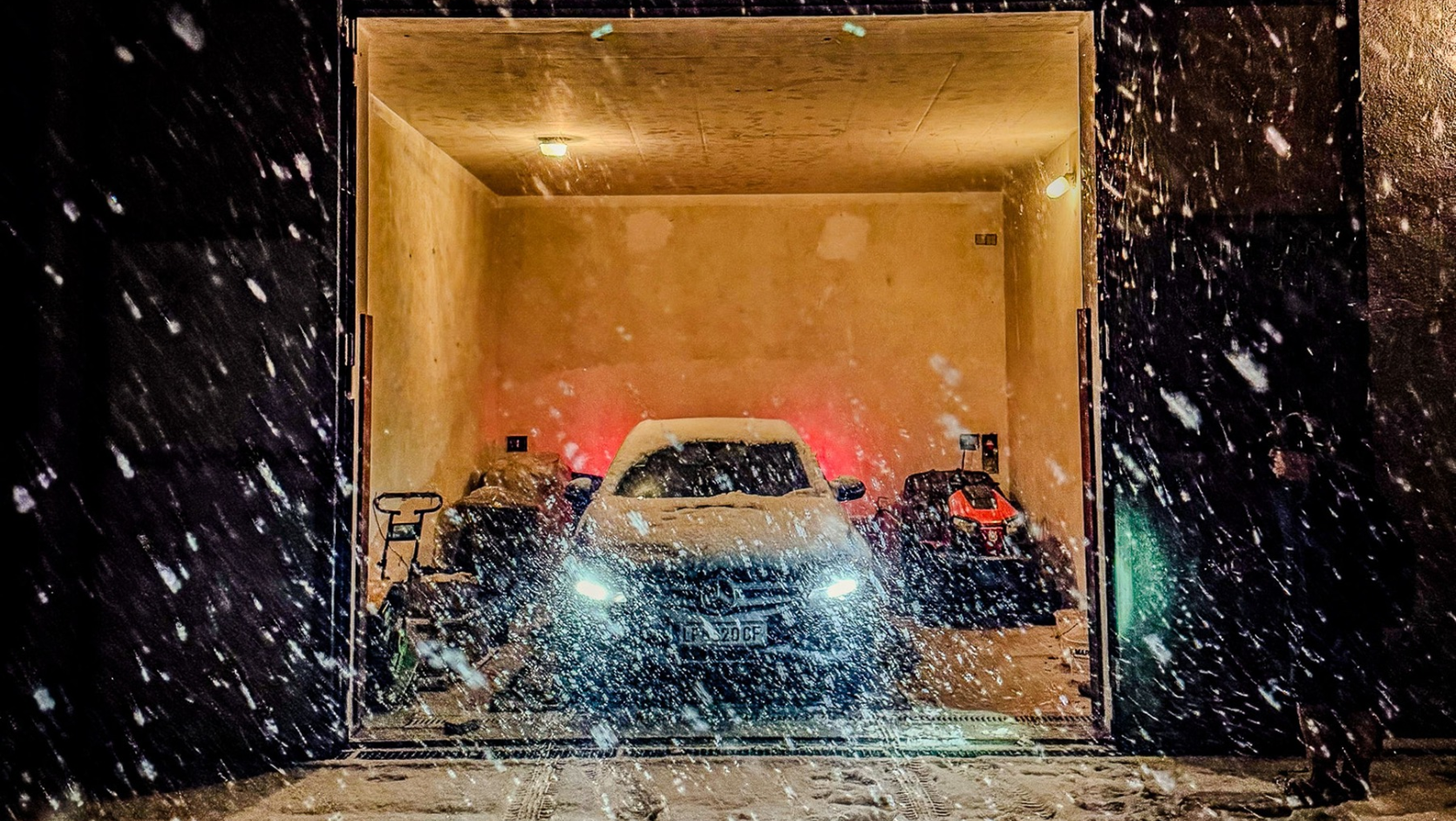
If you skipped straight to this section, no judgment. Location matters. Ideally, you have a closed garage or shed that's clean and free of moisture.
Best surfaces. Concrete and asphalt are best. Gravel and bare dirt add moisture and contaminants, and the underbody is where it starts. Moisture means corrosion, and that's not a good look (Economical Insurance). If you can't avoid it, lay plastic sheeting on the ground under the car and wooden planks under the tires. Desiccant packs in the cabin can help with moisture too. An unheated garage is fine as long as it's completely dry and pest-free.
Covering your car. Covering the car is good practice, but some covers that seem protective can cause problems. Plastic tarps can scratch your paint, and Kolle warns that plastic covers and car bubbles can trap moisture and encourage mold. Choose a soft, breathable cover. If you're storing outdoors, that's a different game: you need a weather-resistant cover that's securely fastened.
Rodents
I've seen plenty of car guys online pick up a barn find, haul it to the workshop, and find bodies inside. Yikes. Over winter, rodents take shelter wherever it's warm, and your prized project car (or track car) is a prime candidate.
Their favorite snack is your wiring, and they love nesting under your upholstery. Then the first day of spring arrives, and you're scratching your head over thousands of dollars in repairs, according to Hagerty.
Scare them off (but don't count on it). Mint and cinnamon scents are common deterrents, and dryer sheets are a popular folk remedy. Neither is foolproof, so treat every method as risk reduction, not protection. Clean the interior before storage and remove anything edible. (Yes, we know their favorite snack is wiring. Don't give them appetizers.)
Does your insurance cover rodent damage? If you find chewed wiring in the engine bay or damage inside the cabin, check whether your policy covers rodent damage. Many standard policies exclude it, so it's better to check before it happens.
Should you start your car during winter storage?
Opinions are divided. Some mechanics recommend starting a stored car periodically. Kolle argues against it: short idle periods introduce moisture into the exhaust system without burning it off. Others say a properly stored car doesn't need starting at all. If you're planning to start it, a few minutes of idling is the worst of both worlds. Either leave it parked or take it for a proper drive on a dry, mild day.
This matters most for turbocharged cars and modified exhaust systems. Tell us where you land.
Insurance: do you have the right policy?
If your policy is up for renewal this winter, check it. If you own a hot-rod or modified car, you might have the wrong one. Terms vary by insurer and by country (US vs. Canada), so ask your broker.
- Don't drop collision coverage. Storing your car in your garage can still lead to bumps and mishaps, and Hagerty's Kolle says most claims happen in the garage. Ask your broker about storage discounts, but don't gut your protection.
- Check whether rodent damage is covered. As we said in the rodent section, coverage can save you thousands in repairs.
- Declare your modifications. Some insurers cover modified cars as long as the modifications are declared transparently.
- Tell your insurer if storage moves. If your storage location is declared on your policy, give your agent the new address if you move the car to another unit.
Avoid these mistakes
Better safe than sorry. Here's what to avoid when you winterize a modified car:
- Plastic tarps or non-breathable covers
- Dropping collision coverage
- Storing on gravel or dirt without protection
- Skipping the fall oil change
- Relying on dryer sheets alone to keep rodents out
- Disconnecting the battery on an electronics-heavy car without checking first